
Mastering keyword research is essential if you want your website or blog to be found on Google. Keyword research is the foundation of search engine optimization (SEO), and it’s one of the most important steps in digital marketing.
As an SEO expert in Nepal, I’ve worked with clients from various industries, and I know how powerful keyword research can be for attracting the right audience. This guide is tailored for beginners, small business owners, bloggers, and anyone new to SEO.
I’ll break down everything in simple terms and give you actionable steps to start your journey with confidence.
What is Keyword Research?
Keyword research is the process of finding and analyzing the words and phrases (keywords) people type into search engines like Google. The goal is to use these keywords to create content that matches what people are searching for. Imagine you’re opening a bookstore. Keyword research is like finding out which types of books your customers want so you can stock the shelves with exactly what they need.Why Keyword Research is Important
- Understand Your Audience: Know what your customers are searching for.
- Boost Visibility: Appear in relevant searches and attract more visitors.
- Drive Sales: Target high-converting search terms.
- SEO Strategy: It’s the base of all successful SEO efforts.
Understanding Search Intent
Search intent is the reason behind a search query. It’s what the user wants to achieve.Types of Search Intent:
- Informational: “What is on-page SEO?”
- Navigational: “Facebook login”
- Transactional: “Buy running shoes online”
- Commercial: “Best DSLR camera under Rs.100k”

Tools for Keyword Research
Free Tools:
- Google Keyword Planner
- Google Search Console
- Google Trends
- Answer the Public
Paid Tools:
- Ubersuggest
- SEMrush
- Ahrefs
- Moz
Types of Keywords You Need to Know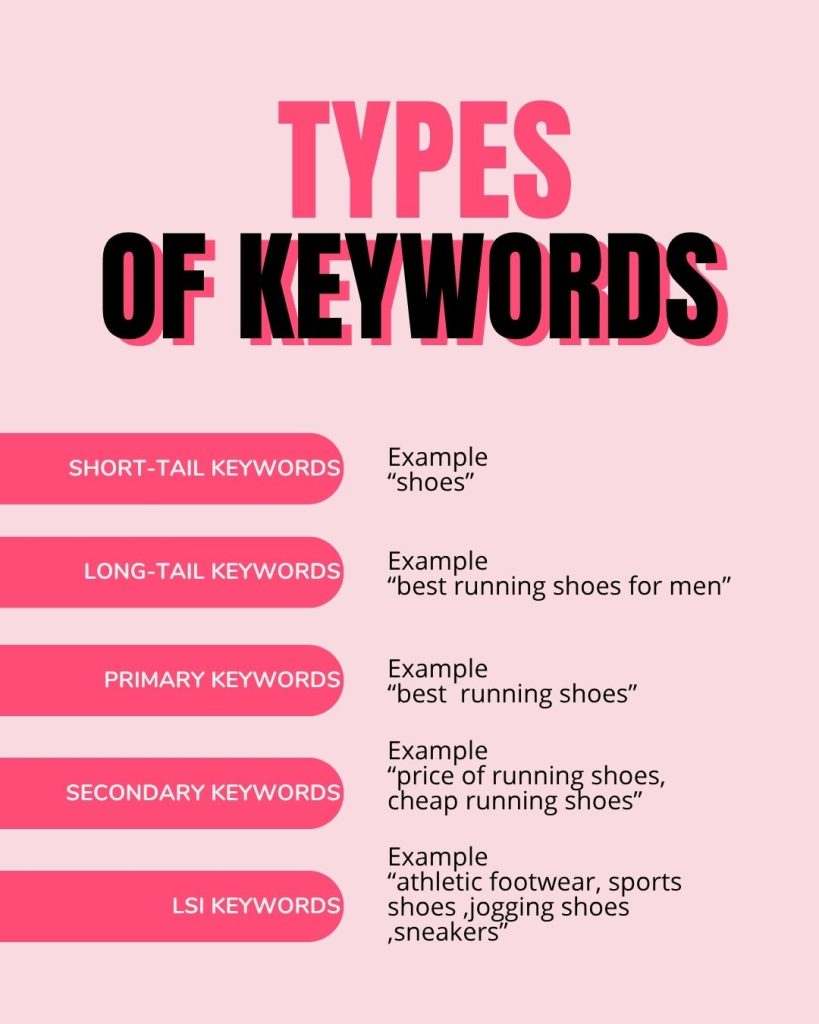

- Short-tail Keywords: 1-2 words (e.g., “shoes”)
- Long-tail Keywords: 3+ words (e.g., “best running shoes for flat feet”)
- Primary Keywords: Main focus of the content
- Secondary Keywords: Related supporting terms
- LSI Keywords: Contextually related terms (e.g., “sneakers, jogging shoes, athletic footwears”)
How to Do Keyword Research – Step-by-Step Guide
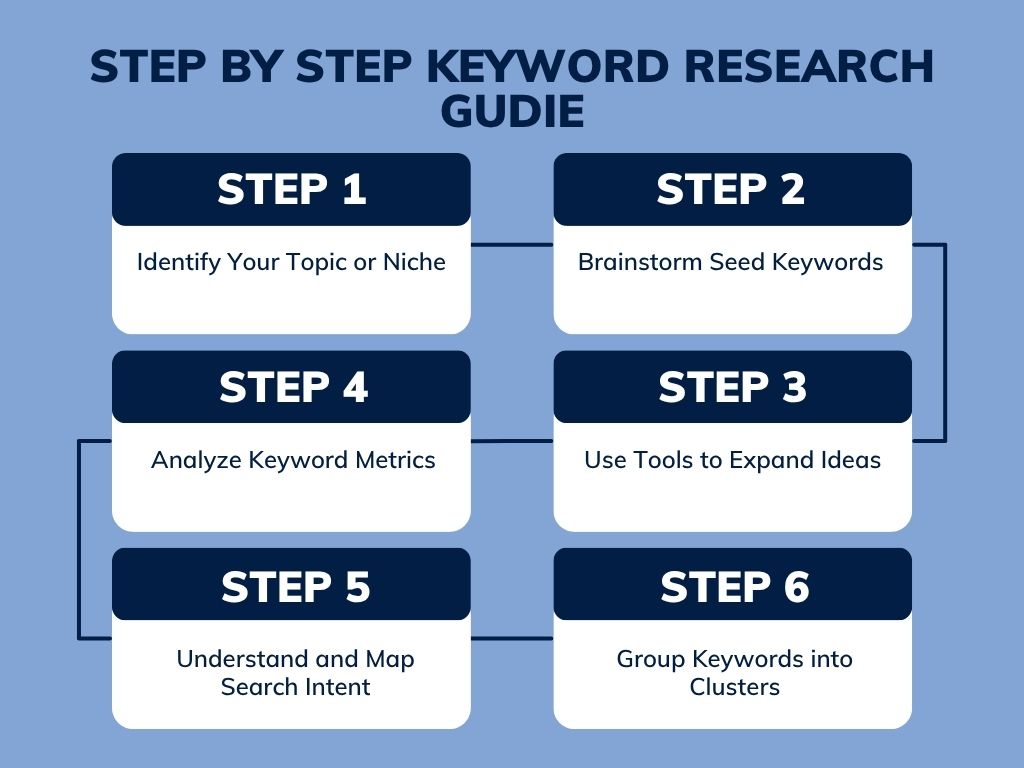
Identify Your Topic or Niche
Start with a general topic related to your business.Brainstorm Seed Keywords
Think about words your customers might type into Google.Use Tools to Expand Ideas
Use the tools mentioned above to generate more keyword ideas.Analyze Keyword Metrics
Look at monthly search volume, competition, CPC, and trends.Understand and Map Search Intent
Make sure your keyword matches what users expect to find.Group Keywords into Clusters
Organize keywords into related groups to plan your content better.Metrics That Matter in Keyword Research
- Search Volume: How often the keyword is searched.
- Keyword Difficulty (KD): How hard it is to rank.
- CPC: Useful if you’re running ads.
- Trends: Is the keyword growing or declining?
- CTR Potential: Are people likely to click on your result?
Organizing and Clustering Keywords
Keyword clustering means grouping related terms together. This helps you create:- Content hubs or pillar posts
- Blog post series
- Category pages
How to Use Keywords in Your Content
- Place in title tag, meta description, and URL
- Use in headings (H1, H2, etc.)
- Naturally sprinkle through the content body
- Include in image alt texts
- Use synonyms and variations
Common Mistakes Beginners Make in Keyword Research
- Choosing keywords with too much competition
- Ignoring user intent
- Not checking if people are actually searching for it
- Focusing only on search volume, not relevance
- Not updating keyword strategy regularly
Real-Life Case Study or Example
Let’s say you run a dental clinic in Bhaktapur and you want to increase your website traffic. Here’s a step-by-step approach to achieve that using keyword research:- Seed Keyword: “Dental Clinic”
- Long-tail variation: “Best dental clinic in Bhaktapur”
- Tools: Use Google Keyword Planner and Ubersuggest
- Result: You discover low-competition, high-intent keywords and create a blog post around them.
Updating Your Keyword Strategy Over Time
As users change the way they search over time, it’s important to regularly update your keyword research to stay relevant and competitive. Here’s how to keep your keyword strategy up-to-date:- Review keyword rankings quarterly
- Use Google Trends for seasonality
- Track competitors and adjust accordingly
Final Tips for Beginners
- Focus on long-tail, low-competition keywords
- Think from the user’s perspective
- Match content with search intent
- Use keyword clusters for better structure
- Keep testing and improving
Keyword research is your roadmap to SEO success. It helps you clearly understand what your audience wants and gives you the insight to serve them better. Whether you are starting a blog, running a local business, or launching an e-commerce site, this beginner’s guide will put you on the right path.
Now it’s your turn to take action. Start your keyword research today, choose your target keywords wisely, and optimize your content for real people. If you want expert help in building a high-ranking SEO strategy, feel free to book SEO Consultation with me and let’s grow your website together.
